

Recent Updates
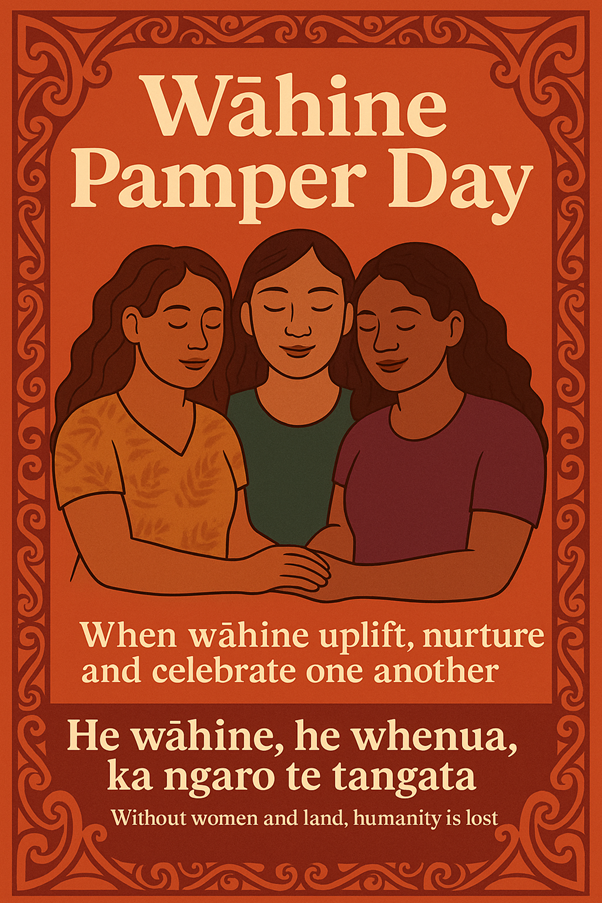
Wāhine Pamper Day, A Celebration of Healing and Connection
Our Wāhine Pamper Day was a stunning reminder of what happens when wāhine come together to uplift, nurture, and celebrate one another. Around 18–20 wāhine joined us for a day dedicated to rest, reflection, and selfcare with free haircuts, nails, waewae mirimiri, and a chance to experience somatic therapy.
The atmosphere was full of laughter, kōrero, and aroha. As we shared kai and stories, we reflected on our journeys, some just beginning with us, others who have walked alongside Te Hono o Ngā Waka for the past five years. Each wahine brought her own story of growth, resilience, and transformation, and together we created a beautiful kupenga (net) of connection and support.
This day wasn’t just about pampering, it was about manaakitanga, whanaungatanga, and recognizing the strength of wāhine who hold so much for their whānau and communities. Kupenga is about weaving those threads together, strengthening each strand through aroha and shared experience.
We left feeling lighter, restored, and deeply connected. The kōrero, the laughter, the care, all reminders that when wāhine fill their own cups, they have even more to pour back into their whānau.
And yes, by popular demand, we’ll definitely be doing this again! These moments of celebration and healing are what keep our kaupapa strong.
He wāhine, he whenua, ka ngaro te tangata- Without women and land, humanity is lost.
Te Hā Ora, The Breath of Life
Our 8-week Giving Up Vape/Smoke Support Group has wrapped up with incredible success!
Nine amazing whānau came together with courage, honesty, and aroha, learning, healing, and reclaiming their hauora.
Five have already quit completely, three have cut right back, and everyone gained new tools, confidence, and whanaungatanga.
We’re so proud of this kaupapa and all those who took part, proving that change happens through connection, culture, and compassion.
Thank you to the PHO who continue to sort us on this Journey esp Jackie who now is part of the team on a Thursday
#TeHāOra #TeHonoONgāWaka #Hauora #WhānauWellbeing #SmokeFreeAotearoa #ManaMotuhake #Whanaungatanga #ReclaimYourBreath

NATINA Conference Neuroscience and Trauma Informed Network Aotearoa
At Te Hono o Ngā Waka, we’re always looking for opportunities to learn, grow, and bring fresh knowledge back home to Te Tai o Poutini. This month, Julia and I were incredibly blessed to travel to Auckland to attend the very first NATINA Conference – Neuroscience and Trauma-Informed Network Aotearoa.
It was a full house with around 20 incredible speakers, each bringing their own blend of lived experience, expertise, and deep compassion. Every kōrero was powerful, you could feel the passion in the room as people spoke about changing systems, shifting mindsets, and centering aroha in all we do.
The conference brought together like minded people from all across Aotearoa, all committed to improving inclusion, equality, learning, and wellbeing for our tamariki in kura and in our wider communities. The kaupapa aligns perfectly with our mahi here on the Coast, where we walk alongside whānau with a trauma-informed, whānau-centred approach.
One kōrero that really stayed with us was this:
“Behavior is communication – listen, observe, validate, and empathise.”
We were reminded to ask pātai, look for the need driving the behavior, and most importantly, to see the person, not just the problem.
Meet the need. Reconnect. Equip tamariki with better ways to express themselves in the future. Model the behavior you want to teach in that order. That’s the heart and soul of working with our tamariki and whānau, instead of against them.
Sometimes the solution to a connection problem begins with just nine simple words:
“I’m here.” “I hear you.” “How can I help?”
This wānanga filled our kete with new insights, tools, and aroha. We came home feeling re-energised and grounded in purpose ready to keep building trauma informed, compassionate spaces for our tamariki, rangatahi, and whānau across Te Tai o Poutini.
At Te Hono o Ngā Waka, we’ll continue to walk alongside our community listening, learning, and leading with aroha so every whānau feels seen, heard, and supported to thrive.

Kaumātua Hui A Year of Laughter, Connection and Kai
This year we have been truly blessed to continue the Kaumātua Hui — a beautiful kaupapa originally started by Reo Māori Mai. With the support of our two hapū, this monthly gathering has carried on, bringing our kaumātua together to share laughter, stories, and plenty of kai.
Our very own Mikayla has taken the lead on this kaupapa — nerves and all — and she’s done an incredible job creating days filled with fun, aroha, and connection. From bingo (lots of bingo!) to crafts, movie days, planting sessions and more, every month has brought something new and special.
A huge mihi to Mikayla for her heart and dedication, and to all her helpers along the way, Tina, Hayley, Nicole, and many others who’ve supported behind the scenes to make each hui run smoothly.
We also want to give a big thank you to Reo Māori Mai for getting this kaupapa started and setting such a beautiful foundation for us to continue. Your mahi has left a lasting legacy for our community and kaumātua.
We’re already looking forward to our big Christmas celebration together and to another year ahead in 2026, filled with laughter, friendship, and shared memories.
He mihi nui ki a koutou katoa, thank you for keeping this special kaupapa alive and thriving.

Our Beautiful Rangatahi Kapa Haka Shine at the Regent Theatre
Last week, our incredible rangatahi took to the stage for their kapa haka dress rehearsal at the Hokitika Regent Theatre and what an unforgettable night it was!
Over 200 people filled the theatre, a true reflection of the deep connection between the group, their whānau, and our wider community. The energy, pride, and aroha in the room were palpable as our rangatahi performed with such grace, professionalism, and passion.
I remember like it was yesterday when Whakataerangi, the founder, came to me with an idea. She said she wanted to develop a rangatahi kapa haka group, but wasn’t sure how or where to start and she had no funding. It sounded like the best idea ever, and I told her, “I’m not sure how either, but let’s just start. I’ll fully support you, and we’ll make it work it’s great for the youth of Te Tai o Poutini, and great for our whānau and community.”
From that moment, the journey began. Since then, we’ve done countless funding applications, built partnerships, and received incredible support from across our community. It has been truly inspiring to see it all come together the dream becoming a living, breathing kaupapa that uplifts everyone involved.
The rangatahi come from all over Te Tai O Poutini, and the commitment from each and every one of them is nothing short of amazing. Man, can they sing! Their poi, their actions, and their haka took our breath away. They even wrote their own words and actions.
Their performance was a celebration of all their hard work over the past year, every waiata, haka, and movement reflecting their passion, dedication, and pride.
As they prepare to compete in Christchurch this December, they continue to train hard, growing in confidence, unity, and strength with each practice. Watching their growth has been one of the most rewarding experiences, and we couldn’t be prouder of how far they’ve come.
E mihi ana ki a koutou katoa ngā rangatahi, ngā kaiako, ngā mātua, me te hapori whānui — for your unwavering support and aroha.
Christchurch, get ready — Te Tai o Poutini is coming with heart, mana, and pride!
Love your mahi, rangatahi. Kei runga noa atu koutou!

Signing Away the Future – Housing Crisis on Te Tai o Poutini
As a Kaiwhakahaere of Te Hono o Ngā Waka, and in my role as a Justice of the Peace, I witness first-hand the scale of hardship our whānau are facing. Increasingly, I am asked to sign KiwiSaver withdrawal forms, not for the purchase of a first home, but simply so whānau can survive another week. The funds that were supposed to provide security for the future are being drained to cover today’s bills, leaving no pathway forward.
On the ground here in Te Tai o Poutini, the reality is stark and unrelenting.
Emergency housing is failing. Families are placed in motels for months on end, with no plan and no hope of moving into a safe, stable home. Tamariki are growing up surrounded by uncertainty, without the security of a place to belong. The constant moves, overcrowding, and lack of routine are taking a heavy toll on their wellbeing and their learning.
Rents are out of control. Whānau are handing over most of their paychecks just to keep a roof overhead. After rent, there is little left for food, power, petrol, or school costs. Choices no parent should have to make, like whether to heat the house or feed their children properly, are now daily realities. Many are left in cold, damp, overcrowded homes that make asthma, sickness, and hospital visits part of everyday life.
Home ownership is out of reach. For most families, the dream of owning a home has vanished completely. They have been shut out of the housing market, not just today but for the foreseeable future. The effect is intergenerational, children are growing up without the stability and pride that comes with home ownership, and parents are watching the chance of building equity and security for their whānau slip further away every year.
This is not only an economic crisis, it is also a cultural and intergenerational one. As Māori, we are in the midst of learning about both colonisation and decolonisation. On one hand, decolonisation is empowering us to reclaim reo, tikanga, mātauranga, and identity. On the other, learning the full truth of colonisation can be devastating. It forces us to face how land loss, displacement, systemic racism, and deliberate suppression of our reo and tikanga have created the inequities we live with today.
For many whānau, this knowledge lands heavily when they are already carrying the daily struggle of poverty and housing insecurity. It is retraumatising to learn that the struggles of today are not accidental, they are the direct result of generations of colonisation. Whānau are expected to heal from trauma while still living in unsafe homes, signing away their KiwiSaver for survival, and trying to raise tamariki in environments that strip away dignity and hope.
Our resilience is not in question. Our people are working hard, showing strength, and doing all they can to survive. But survival should not mean sacrificing the future. Each KiwiSaver withdrawal I sign is not just a document, it is another reminder of whānau forced to spend their future just to make it through the present.
The truth is simple: band-aid measures are no longer enough. Motel rooms and emergency fixes cannot replace real homes. Without systemic change, long-term housing solutions, and a commitment to equity for rural and Māori whānau, the crisis will only deepen.
What is needed is urgent, structural action: investment in affordable housing, stronger protections for renters, and pathways to home ownership that are realistic for ordinary whānau. Every family deserves the dignity of a safe, warm, stable home, not just for today, but for generations to come.
My call is simple: decision-makers must act now.
Central government must prioritise rural housing equity and Māori housing initiatives.
Local councils must stop deferring responsibility and invest in long-term housing infrastructure.
Iwi, hapū, and community providers must be resourced to lead solutions grounded in our values and whakapapa.
Without this, Te Tai o Poutini will continue to carry the unbearable weight of both immediate survival and intergenerational trauma. And I will keep signing the papers, witnessing futures being sacrificed because the system has failed them.
Would you like me to make a short, hard-hitting version of this at the end too (like a 3–4 sentence summary) that you could use for social media alongside the full blog?

Whakawhanaungatanga in Action: Small Groups Making a Big Difference
At Te Hono o Ngā Waka, we believe in the power of small, consistent connections to grow strong communities. Over the past few months, our team has been privileged to support a range of kaupapa-led groups aimed at uplifting our rangatahi and whānau — and we’ve seen firsthand how something as simple as gathering around kai or weaving together can create real impact.
From our Kupenga, Cooking, mental health and life skills sessions to our Online Learning Support options, these groups have become safe, welcoming spaces for learning, growth, and whakawhanaungatanga.
Kupenga and Cooking – More Than Just Skills
Whether it's learning how to prepare a hearty meal or weaving a kupenga with care and patience, our hands-on sessions have offered more than just practical skills. They’ve been about connection. Often, we’ve had three generations sitting side by side — tamariki, mātua, and kaumātua — sharing stories, laughter, and knowledge. These moments of intergenerational exchange are powerful. They affirm identity, strengthen whakapapa ties, and remind us that we are all learners and teachers in different ways.
Cooking together has also been a chance to kōrero about kai sovereignty, budgeting, healthy eating, and keeping traditions alive through our kai. For many of our rangatahi, it’s been their first time in the kitchen learning these skills — and they’ve stepped up with pride.
Supporting Learning, Online and In Person
We also understand that learning looks different for everyone. For those navigating school or trying to re-engage with education, our Online Learning Support options have been there to help. Whether it’s helping with assignments, creating space for tamariki to focus outside of the home, or connecting whānau with digital tools — we’re proud to walk alongside them.
We’ve seen beautiful moments of rangatahi gaining confidence in themselves and their learning journey. Sometimes, all it takes is someone believing in you and showing up week after week.
A Space to Belong
These small groups might seem simple — a shared meal, a quiet learning session, a woven net — but they represent something much bigger: belonging. Our kaupapa is always about creating safe spaces where people feel seen, heard, and supported, no matter their age or stage.
As our whānau continue to show up for each other in these spaces, we’re reminded that healing, growth, and transformation happen through relationships, not just programmes. And for that, we are incredibly grateful.
Ngā mihi nui to everyone who has been part of our groups so far. Your presence, energy and aroha make all the difference. We look forward to continuing this mahi with you all.

He Kōrero mō Matariki: Reflecting on a Special Time in Te Ao Māori
Last month, as the crisp winter air settled over Aotearoa, we came together to acknowledge a deeply significant time in Te Ao Māori — the rising of Matariki, our Māori New Year. Matariki was more than just a celestial event; it was a time of connection, remembrance, and renewal across our whānau and hapori.
The History of Matariki
Matariki is the Māori name for the cluster of stars known globally as the Pleiades. Traditionally, its rising in the mid-winter sky marked the beginning of the new year in the Māori lunar calendar. For generations, iwi across the motu have looked to Matariki as a signal to pause — to honour those who had passed, to give thanks for the kai harvested, and to prepare for the year ahead.
Each iwi holds their own pūrākau and traditions around Matariki. For some, the cluster represented a mother and her six daughters. Others recognised nine stars, each representing an element of life — from food and water to health and well-being.
The Meaning of Matariki
In Te Ao Māori, time is viewed as cyclical rather than linear. Matariki reflected this beautifully — a time to look back in remembrance and forward with intention. It reminded us to celebrate the present, mourn those we had lost, and plant seeds of hope and purpose for the year ahead.
With Matariki now officially recognised as a public holiday, more people across the motu took the opportunity to reflect and reconnect with mātauranga Māori, te taiao, and one another. For us at Te Hono o Ngā Waka and many others across Te Tai o Poutini, this was a powerful time to centre our values of whanaungatanga, manaakitanga, and kotahitanga.
Celebrating Matariki in Our Community
This year, our Matariki celebrations brought whānau together in beautiful and meaningful ways. We shared kai, lit candles in remembrance, told stories, sang waiata, and took time to be present with each other. Tamariki and rangatahi engaged in learning about whakapapa, māramatanga, and the importance of reflecting on the year that had been.
These moments reminded us of the strength of our community and the beauty of our culture. Whether through wānanga, crafts, shared meals or quiet reflection, every action was an act of reconnection — to each other, to the land, and to our tūpuna.
Looking Ahead
As the Matariki stars rose and now begin to fade again from view, they left behind a trail of warmth and clarity. We honoured those we lost, gave thanks for the gifts we hold, and made space for new beginnings. Matariki was a gentle yet powerful reminder that healing, growth, and transformation all begin with reflection.
Though the official celebrations may have passed, the kaupapa of Matariki continues in our daily lives — in the way we show up for each other, the way we care for our environment, and the way we carry our whakapapa forward with pride.
Ngā mihi nui ki a koutou i hono mai, i whakanuia hoki i tēnei wā hirahira. Kia tau ngā manaakitanga o te tau hou Māori ki runga i a koutou katoa.

Winter Boxes Rolling Out Again!
It’s that time of the year again—Te Hono o Ngā Waka is proud to be sending out our Winter Boxes to whānau across Te Tai o Poutini.
As the colder months settle in, we know just how important it is to keep our homes warm and our hearts full. These Winter Boxes are more than just seasonal supplies—they’re a reminder that no one stands alone. Each box has been thoughtfully packed with warmth, care, and aroha to support our whānau through the chill of takurua.
From essential winter items to comfort treats, our goal is to ease some of the pressure many face during this time of year. We’ve seen firsthand how impactful a small gesture can be—especially for those who are isolated, vulnerable, or facing tough times.
We also want to remind whānau that if your whare is cold, damp, or in need of support, we can help. If you would like a Healthy Homes Assessment, please get in touch with us. We can walk alongside you to find practical solutions to make your home warmer, drier, and healthier for you and your tamariki.
A huge mihi to our team, volunteers, and supporters who make this kaupapa possible. Your mahi ensures these boxes get to the right hands at the right time, lifting spirits and bringing practical relief to the homes of our whānau.
He iti te koha, nā te ngākau nui—
A small gift, from a big heart.

Team Day – Reconnecting to Whenua, Whakapapa, & Each Other
As part of our ongoing commitment to re-indigenise ourselves and our mahi across Te Tai o Poutini, the Te Hono o Ngā Waka team spent a powerful day immersed in our local history, whenua, and stories.
We began our journey in Māwhera, where we explored both Pounamu Pathways exhibits. These taonga-rich spaces offered us the opportunity to deepen our understanding of the pounamu stories of our rohe—reminding us of the enduring significance of our connection to whenua and wai. The kōrero shared throughout the day grounded us further in our whakapapa and the stories of those who came before us.
From there, we continued to Punakaiki to visit the beautifully designed Punaeani Visitors Centre. This space not only showcases the natural beauty of the area but holds the purākau and mātauranga that remind us of the richness of our cultural heritage. It was a moment of both reflection and inspiration, reinforcing our purpose and reminding us of the depth beneath our mahi.
Of course, no hīkoi is complete without kai—and we were treated to some incredibly delicious pies, including unique and tasty flavours like hāngī and watercress!
These experiences are vital to our growth as a team. They help us realign with our kaupapa, with each other, and with the people and places we serve. As we continue our journey of cultural reclamation and restoration, days like these are not just refreshing—they are necessary.

Kaumatua Hui
We are absolutely loving the opportunity to work alongside and support our kaumātua — connecting, sharing stories, and enjoying outings and activities together. Their energy, wisdom, and warmth bring so much joy. We feel incredibly lucky and grateful to have them as part of our lives. 💛

Wāhine Mau Rākau Wānanga – We Did It!
We finally did it – we brought back our Wāhine Mau Rākau Wānanga! It's been a long time since our last one, and for many reasons—mostly due to limited capacity and capability in this treasured taonga—we haven’t been able to host one until now.
Since our earlier wānanga a few years ago, our beautiful Maia took a year out to upskill and gain experience in mahi, during this time, she also welcomed a precious pēpi into the world—ngā mihi aroha, Maia!
We are also excited to welcome Amo into the kaupapa, joining Maia to deliver the wānanga as a team. It’s a real blessing to have them both leading this space with strength, humility, and heart.
This recent wānanga was a one-day event to ease back in, and we’re hoping to run a full two-day wānanga later this year. It’s a clear reminder of how vital yet fragile our capacity is in this space—and just how important it is to prioritise and nurture it.
Mau Rākau is a taonga that belongs in our community. It holds healing, discipline, connection, and cultural reclamation. We’re committed to making sure that this kaupapa continues to grow and be available for our whānau.
He taonga tuku iho – let’s protect and uplift it, together.
